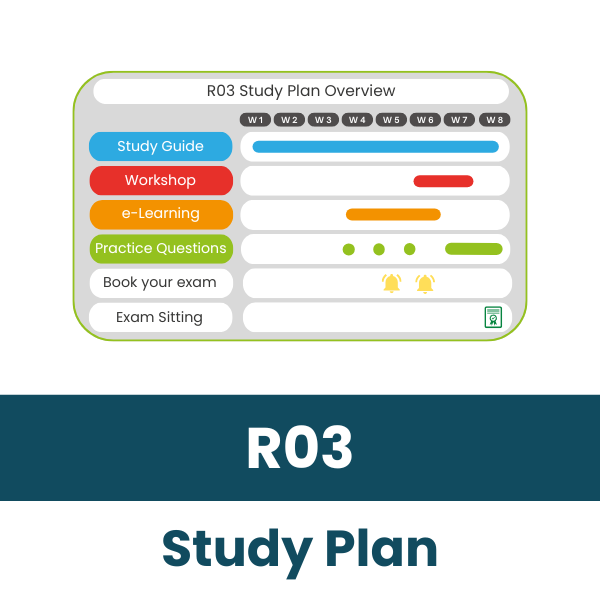
R03 has a reputation for being challenging…and it is easy to see why.. 50 questions in 60 minutes can be tough going!
R03 brings together all the different taxes, investment taxation, trusts, stamp duties and is a calculation-heavy exam. It can seem a bit of a step up for many learners compared to R01 or R05. Often the difficult part is working out where to start and how the pieces fit together.
Before you think about ordering any study materials, decide when you are aiming to sit the exam. This will help you work out how much study time you have and also choose the correctly dated study materials for the relevant exam year.
If you are sitting your exam between a certain date then your materials will need to be dated e.g 26/27.
An exam date creates a finish line and helps keep you focused on your study. R03 is best tackled in manageable sections, with regular revision and question practice from the start. Take your time with this one!
R03 is not simply a memory test. You need to recognise relevant tax allowances for individuals, work through calculations methodically and apply knowledge on every question.
Take Income Tax. It is not just about remembering specific rates (you have the Tax Tables to help you with this!) but you do need to identify different types of income and calculate them in the right order.
The same applies to Capital Gains Tax. A question may include several figures, dates and transactions. Your first job is not to reach for the calculator. It is to establish what is being asked and separate the relevant facts from irrelevant background detail.
The more practice you get, the less overwhelming the questions become.
R03 becomes more manageable by separating the different types of taxes you’ll be examined on:
You do not need to understand every connection immediately. Tax topics overlap, and it is normal for some areas to make more sense when you return to them later.
One of the best R03 revision tips is to use the CII Tax Tables throughout your studies, not just when you start attempting specimen exams.
The Tax Tables can look intimidating at first. There is a lot on there, and it can feel as though you need to know where everything is straight away.
Don’t panic. The good news is they will be provided to you to refer to in your exam!
R03 tests across all the tax areas shown in the tables, so make them a familiar reference point from the beginning. The Tax Tables have clear separate sections on Income Tax, National Insurance, CGT, IHT and investment taxation. The more often you refer to them in revision, the quicker you will be able to find what you need on exam day.
BTS study materials guide learners through each tax area in a clear, structured way. As you work through the topics and practise calculations, the Tax Tables begin to feel less like a wall of numbers and more like a useful tool that supports your study.
It also means you do not need to memorise every different tax rate (thankfully!). You need to understand the process, know what information you are looking for and be confident using the tables alongside the facts in the question.
R03 is calculation heavy. Luckily BTS has your back!
For each calculation type, we develop a repeatable method: help you identify the relevant facts, follow the steps in order and finish with a quick sense-check.
For example, with an Income Tax question: What types of income are we looking at in the question? What specific tax rates apply? What allowances need to be considered before the calculation begins? We take you through the process step-by-step.
For CGT, there’s lots to consider. Start with identifying the disposal amount, what tax year did that occur in, any losses to carry forward? The CGT rate paid by the individual depends on their Income Tax band, so you can start to see how these taxes are connected!
A wrong answer is still useful when you can identify why it happened. Did you miss a fact, apply the wrong rule, skip a stage or simply rush? It’s perfectly ok to make mistakes as you study, that’s how you learn!
Wordy questions tend to come up in R03 and are not automatically bad news. Much of the detail is often irrelevant (read the question carefully!) Identify what each sentence is telling you and whether the information is relevant for this particular type of calculation.
A good tip is to read the last sentence first and then work backwards.
You do not need perfection to pass R03. You need a reliable structure, enough practice and confidence in your approach. Little and often is a good approach with this one.
As you make progress with your studies, focus on the areas you find hardest, revisit them regularly and give yourself time to practise under exam conditions.
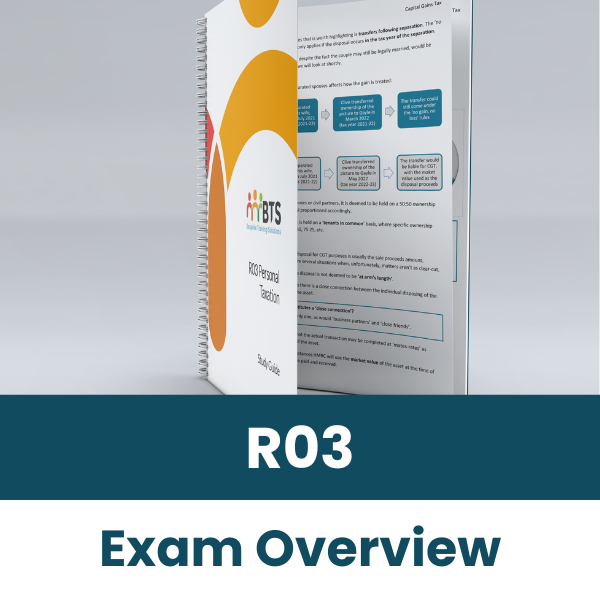
And you do not have to work it all out alone. BTS has a range of R03 resources and support available to help you ace your exam, including our renowned Study Guides, as well as e-learning and Revision Workshops to help you bring all your learning together.
Reach out to the team if you would like help choosing an option that suits your learning style.